I should start this off with an admission: I am an X-COM nerd. Unless you've been in the gaming equivalent of living in a cave for the last 14 years, you've probably heard of this title. First released as UFO: Enemy Unknown in the UK and later released as
X-COM: UFO Defense in the states, this gaming title is the pinnacle of strategy games. It's almost always the top choice for gaming magazines and websites, having won IGN's
#1 PC game of all time, IGN's
#12 game across all platforms, as well as the website's
#5 scariest game. It is by far, my favorite game of all time.
The concept of the game was simple -- UFO sightings have increased sharply in the late 20th century, and the governments of the world are getting worried. They decide to create an international organization called X-COM (Extraterrestrial Combat Unit) to combat the threat.

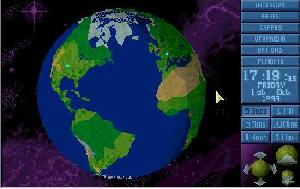
The game combined two separate layers of strategy: a real-time "geoscape" mode, and a turn-based "battlescape" mode. In "geoscape," the player's primary objective was to hunt down UFOs entering the earth's atmosphere and to send out interceptors to shoot them down. After finding a target and sending it to the ground, the player would send a troop transport carrying X-COM's best of the best to investigate the crash site and neutralize any alien survivors. Aside from these primary tasks, the player managed X-COM's bases around the world. In base management, the player can hire scientists and allocate them to research new alien technologies recovered from UFO crash sites. Upon understanding a particular alien technology, the player can then hire and allocate engineers to build those technologies for X-COM to use. Base management includes many other tasks, like managing storage space for collected artifacts, equipping troops for tactical battles, equipping interceptors, purchasing base defenses, and building new structures to expand the base's capabilities. It was also important to intercept and investigate as much alien activity as possible, since funding for the X-COM project is based on performance. Do poorly in any given region, and countries in that area will drop funding. Do poorly for 2 months in a row (finances in the negatives at the end of the month), and the project gets terminated. Aliens win.
But "battlescape" is where X-COM really shined.

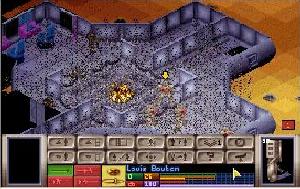
The "battlescape" is where your X-COM soldiers met the alien menace face-to-face. You won't only visit UFO crash sites either: sometimes you'll go to landed UFOs that still have a full crew, or visit alien bases set up on earth, or you may even have a retaliation by the aliens against one of your bases! But the most feared mission of all is the terror site -- where aliens come to terrorize the peoples of earth in their cities. Many an X-COM player has witnessed their entire squad wiped-out at at terror site.
Combat is turn-based, meaning that the X-COM side get a turn to move its soldiers, and find and shoot aliens, and then the alien side gets a turn to do the same to your soldiers. While this may seem slightly unrealistic, the game makes up for it by adding in reaction fire. By saving TUs (time units), X-COM soldiers have a chance to shoot reaction fire at an alien that comes into view or fires at them during the alien side's turn. This turned-based format is far superior to the real-time format from a tactical standpoint. Being turn-based, X-COM allows the player to make intricate tactical plans and execute them with effectiveness. Real-time games require a very sophisticated AI to mirror what a human can do in turn-based format (and I'm yet to see a game convincingly execute this -- just witness the unplayability of the UFO: After[...] series,
UFO: Aftermath,
UFO: Aftershock, and
UFO: Afterlight.) For tactical combat with heavy emphasis on strategy, turn-based format is the only way to go. Even real-time/turn-based "hybrids" (that simply add a "pause" button to the real-time action and let the player queue up unit actions to commence when the game is un-paused) are no better than a straight real-time game. The player ends up pausing every five seconds anyway, so why not go all out turn-based? Only turn-based combat allows the kind of control required for a squad-based, tactical combat game.
And X-COM really set the mood well. The game is one of the most intense and frightening gaming experiences available. The aliens have superior technology, usually have superior numbers, and can do some pretty crazy shit to your soldiers (like turn them into zombies, which, if killed, hatch into more aliens that can turn your soldiers into zombies!) Night missions are particularly troublesome, as your soldiers' line-of-sight is limited but the aliens still have their full vision capacity. This leads to the player walking the map and getting shot in the dark, usually from an unknown location. Aliens hide in tight corners, small rooms, and dark alleys, leaving the player to never know whether or not that next step around a corner will be that soldier's last. Players also get attached to their soldiers as they rank up with each mission and gain experience. Losing a hardened veteran can be disparaging. Morale also plays an important role in setting the mood -- when soldiers die, the surviving soldiers take a morale hit. If things get bad enough, soldiers may start panicking (wasting all their TUs before your turn begins) or even going berserk (using all their TUs before your turn to fire indiscriminately around themselves)! The music helps set the scene too, which is very creepy and atmospheric. It's this kind of tension that engulfs the tactical portion of the game -- it's what makes X-COM so addictive and so satisfying.
UFO: Extraterrestrials (lets put aside the redundant and uncreative title for the moment) aims to be the "spiritual successor" of the X-COM series, and as sad as I am to say it, UFO: ET falls short in a number of ways. The first title released by Chaos Concepts, a small, independent developer based in Czechoslovakia, UFO: ET implements a number of features from X-COM, but in slightly different ways. The different design decisions don't break the game, but they make for a lesser gaming experience in the shadow of X-COM.

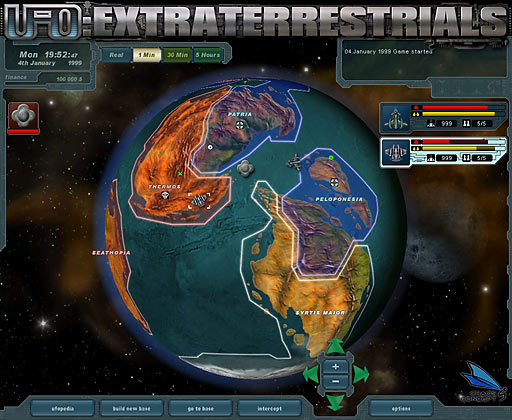
In the "geoscape" in UFO: ET, the globe is divided into territories. In each territory, the player
or the alien force may have only one base. This differs from X-COM, as the player could put a base wherever s/he wanted, and both X-COM and alien bases could be in the same general region. There also seems to be less alien activity compared to X-COM as far as alien bases and terror sites go, too. In X-COM, you could expect a terror mission at least once a month. I've played UFO: ET games in which no terror sites pop up for months at a time. Since there are few territories, alien base missions and base defense missions are rare too. What the game does have is
lots and lots of UFO crash sites, but I'd hardly call them
crash sites. UFOs are always completely intact after being blown to bits by my interceptors. UFO scouts and fighters appear often in the early game, but they don't seem to be doing much other than flying around. Unlike X-COM, UFOs in UFO: ET don't seem to be on a mission -- like scouting out an area, then bringing in the big ships for base-building for terror missions. It seems that in UFO: ET, UFOs just fly around.
The base management is also lacking in UFO: ET. In the player's primary base, the player can do almost all the usual things from X-COM: allocate scientists and engineers, manage soldiers and interceptors, buy and sell equipment, and build new base structures. But some things are missing, like living quarters having an impact on gameplay, general stores (to store your equipment and alien loot), soldier/scientist/engineer recruitment, and the ability to easily re-arrange your base from the pre-designed starter base. Living quarters exist, but they don't have an effect on gameplay. One Living quarters can house a seemingly infinite number of personal, unlike X-COM's, which could only house 50. There's no longer any recruitment in the game of any personal either. One soldier randomly shows up every month or so, and scientists and engineers come in sets of 10 with each laboratory or workshop built. Moving around structures was annoying too -- even if I built an extra hanger, I couldn't destroy the old ones to rearrange the base... even if there was no craft currently in the hanger! X-COM let you move hangers around while your interceptor and transport crafts were on missions, so I don't see why I can't do that in UFO: ET. But you can't do
any of the basic base management functions from X-COM in UFO: ET's secondary bases. Those bases only allow the player to build hangers and detection buildings for UFO interception.
Another problem in UFO: ET is the design decision to have real-time intercept battles in the "geoscape." While this appears to be a good idea, in practice it doesn't seem to work properly. It's unrealistic that a dogfight can stretch more than half-way around the globe in a matter of a few hours. From a gameplay standpoint, the real-time interceptions will give the player a headache when trying to keep UFOs above land. UFOs that land in the water are unrecoverable, and since UFOs will continue to fly around during combat, the player will have to do some serious micromanagement to ensure a crash site. Considering that finances are
extremely tight in this game, selling alien equipment gained from crash sites becomes essential to keeping the checkbook balanced. The inability to direct where a UFO will be shot down is a definite mark against the gameplay.
The final problem in the "geoscape" is the finances. The developers made the decision to subtract salaries from soldiers, scientists, and engineers on a
daily schedule, instead of at the end of the month, like in X-COM. I understand why this choice was made: in X-COM, there is a well known exploit with salaries. All the player had to do was transfer all personal right before the end of the month. Since all personal were in transit, no salaries were paid by the game. Chaos Concepts tried to remove this potential exploit from their game, but only succeeded in creating new problems. Now, finances are difficult to keep track of, and make balancing the checkbook a big headache for the player. The finances screen doesn't give the player a whole lot of information, and it should have given
projections for the end of the month finances with this kind of salary system. Alternatively, the developers should have just tried to figure out a way for the game to count personal in transit when calculating salary at the end of the month. There appear to be some bugs in the finances too; for instance, players will be charged
two days salary for personal if they change research projects on the same day. This was also a bug in X-COM (as far as changing production in workshops in the same month goes), and it would have been nice if UFO: ET had gotten rid of it.

In the "battlescape," UFO: ET doesn't do much better. The game has some interesting design decisions that alter the gameplay in significant ways from X-COM. The biggest change is that soldiers do not die, they are merely incapacitated. Many have complained that this system isn't as great as X-COM's; however, I have to say that I don't mind it so much. The developers made this design choice to cut down on players reloading each turn because a favorite soldier is lost during combat. Honestly, if players want to cheat themselves out of an intense gaming experience, that is their decision. I always enjoyed the "ironman" X-COM games, which involved the strict discipline of never reloading a tactical mission. I felt this way of play kept with the spirit of the game. Others may disagree, as this is a choice of personal preference, but I think that Chaos Concepts was trying to find a way to keep the tension of losing soldiers while also preventing players from reloading every turn. It works in some ways (there are
serious consequences for being careless with soldiers in the form of up to 45 day hospital visits back at base) but the design feature doesn't keep the tension and suspense in the tactical part of the game like X-COM did.
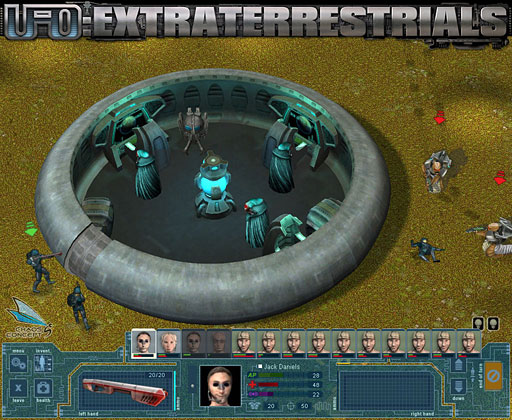
The "battlescape" just isn't that scary in UFO: ET. I don't fear going to terror missions like I did in X-COM. There aren't that many aliens to begin with, and there's really no need to go into buildings. Aliens are almost always walking around in the open, charging your soldiers head-on while making no use of cover. I am yet to see an alien approach my soldiers in any other way. Aliens also walk very close together, making grenades really useful at taking out 2 or 3 baddies at once. Aliens will also run up within a few tiles of your soldiers to take shots that usually miss and eat up all their AP (action points). Not exactly intelligent AI in my opinion. In X-COM, aliens took pot-shots and then hid behind cover, snuck around the map to hit your soldiers from the side, and would retreat into buildings, which made for some really intense and suspenseful gaming. Walking into a room with a soldier and not knowing whether or not they'll survive the reaction fire makes for great tension. UFO: ET just doesn't provide this. And one last thing that really takes away from the fright and tension that could have been -- morale doesn't seem to play any role at all in the game other than soldier susceptibility to mind-paralyzing attacks. Soldiers will never panic or go berserk (at least, they haven't in my experience), which was an aspect of X-COM that really made for interesting and tension fulled gameplay.
Other problems in UFO: ET's "battlescape" are more annoying than anything else. There are no in-game speed settings like in X-COM, so you'll be forced to watch weapon fire crawl across the screen (even well past the intended target!), and soldiers and aliens move at an incredibly slow pace. The game also forces the camera to center and follow
any action the player may do, be it moving, turning, firing, selecting, or kneeling. This can be really annoying to have to watch, and considering that the game can handle more than one action happening at the same time, it's a strange design decision. Forcing the camera to center and follow every action in the game becomes an obstacle to efficiently moving all your soldiers at the same time. None of the X-COM titles forced this kind of "auto-scroll" for every player action.
But that's not all -- UFO: ET is missing all kinds of "battlescape" features from the original X-COM. There's no option to save APs for future actions, like kneeling, shooting, and reaction fire. The game also only has 2 levels on all maps, unlike X-COM which had 4, which leads to smaller missions. Maps are also all pre-designed, meaning that the player will see the same exact maps with the same exact placement of objects often. X-COM had a random map generator, which many give credit for the game's re-playability. UFO: ET's re-playability won't be very long with only about 200 unique maps in the game.
In the end, the game just feels incomplete. It's got a good start, but all the missing features and the strange design decisions can be a serious distraction from the gameplay. The graphics aren't that bad, but their nothing special either. It would have been nice if the units in the game were 3D models instead of 2D sprites, since the tactical mission take place in a fully 3D environment. Since the environment is 3D, it would have been cool to be able to rotate the camera, too (there's a mod that implements this, but the design decision to have 2D sprites for units renders this option effectively useless.) Some other problems with the graphics are just small gripes, i.e. missing and choppy unit animations (aliens instantly "fall" to the ground, unarmed soldiers still look like they are holding a weapon, and soldier/vehicle movement can be choppy when using mods that increase movement/fire speeds.) But aside from those things, I don't have any complaints about the graphics -- it's a
huge step up from UFO Defense's 320x200 resolution VGA graphics.

I felt the need to write this review because I've been waiting for a proper X-COM sequel for more than a decade now.
X-COM: Terror from the Deep, the sequel to UFO Defense, was good, as it added some new features, fixed some exploits and bugs, and made the game nearly ten times more difficult than the original. But the game was built upon the same engine as the UFO Defense, which left many fans wanting more -- better graphics, more interaction, and more complexity.
X-COM: Apocalypse, the final true X-COM sequel, tried to do that but ultimately failed in some respects. The game had updated graphics for its time (1997), a more complex tactical combat system, more

complex base management and finances, more options, more strategy, and tougher gameplay. But the developers of that title, Microprose, were on a tight budget and were forced to leave some really interesting features out of the game (like playing as the alien menace). In addition to that, Apocalypse added in a real-time option to tactical combat, allowing the player to choose between real-time and traditional turn-based before each mission. The side-effect of this "hybrid" game engine lead to a broken turn-based game, and an overpowered real-time game. Sadly, Apocalypse was not able to recapture the tension and suspense of the original X-COM.
Never having a proper sequel to the original, UFO: ET seemed to be the game I was looking for. The developers said their game was to be as true to the original X-COM as possible, and I watched the forums for more than a year anticipating the game's release. When all is said and done, though, UFO: ET just falls short, like every X-COM remake has in the past.
But there's no reason to lose hope just yet. As I continue to visit the game's official forums, I have found a community of modders who are trying to fix many of the broken and missing features in UFO: ET. Already, things like reserving APs in battle, settings to change the speed of actions, hiring and firing soldiers, true soldier death, and a number of bug fixes are available. I have tried some of the mods, and they do help to bring the game closer to X-COM, but I still worry about game balance. Many of the mods change the gameplay, and so I await an official patch from the developers before I attempt to play the game all the way through. I'm still hoping that this could be a sequel worthy to stand in the shadow of X-COM.
Note: Some may question my decision to review this game in the shadow of X-COM, arguing that this is not X-COM but a different game all together. I'm sorry to rain on your parade, but the developers themselves said they aimed to remake X-COM, and they've mirrored the original in concept and design for many aspects of UFO: ET. Therefore, I see it as only fair to judge this game in respect to its differences with the original X-COM.
 This is one of my favorite records -- "Bubblebop Shot" is simply awesome. Strange, fast, punk, noise, and off-the-wall crazy, this song will leave a weird feeling inside your ears.
 Mission of Burma's Signals, Calls, & Marches comes in at 53. This is record that I've been trying to get a copy of for quite a while. Everyone tells me that I'd really like it...
 That's about it for some of my favorite records making the list -- there are other bands on the list I like; however, Pitchfork chose records that aren't really my favorites. Of all the Sonic Youth that made the list, Pitchfork left off Bad Moon Rising. There's also a lot of Pixies records on the list; while I used to like that band much more when I was younger, I haven't listened to them in years. Only a few songs by them can be recalled from my memory. Other bands on the list that I've been meaning to listen to more of are The Fall, The Jesus & Mary Chain, Public Image Ltd., and Minutemen. PiL's First Edition is amazing -- "Theme" is a prefect record opener, and Lydon's lyrics for "Religion" (I & II) are a penetrating stab against that social malignancy akin to the Crass song "Asylum." But I still need to check out PiL's Metal Box, or Second Edition as it is also known.